THE SOUND
Air against an edge
Air blown through a narrow duct hits a sharp edge, which sets the air column vibrating. Covering holes changes the length of that column, and so the note.
How it worksTHE INSTRUMENT, EXPLAINED
Many people's first instrument has a long story.
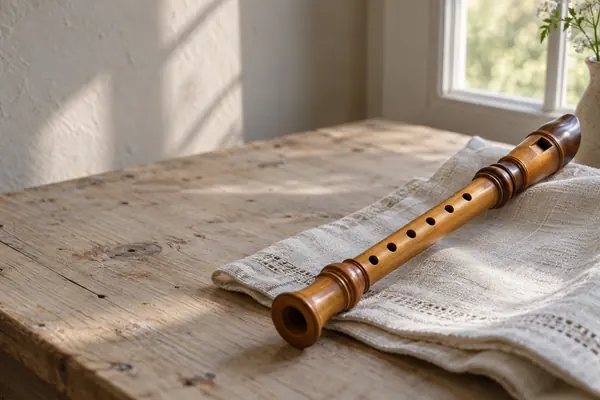
The recorder is a duct flute with seven finger holes and a thumb hole. It was widely played in the Renaissance and Baroque, almost vanished, and returned in the 20th century to become a popular amateur and educational instrument.
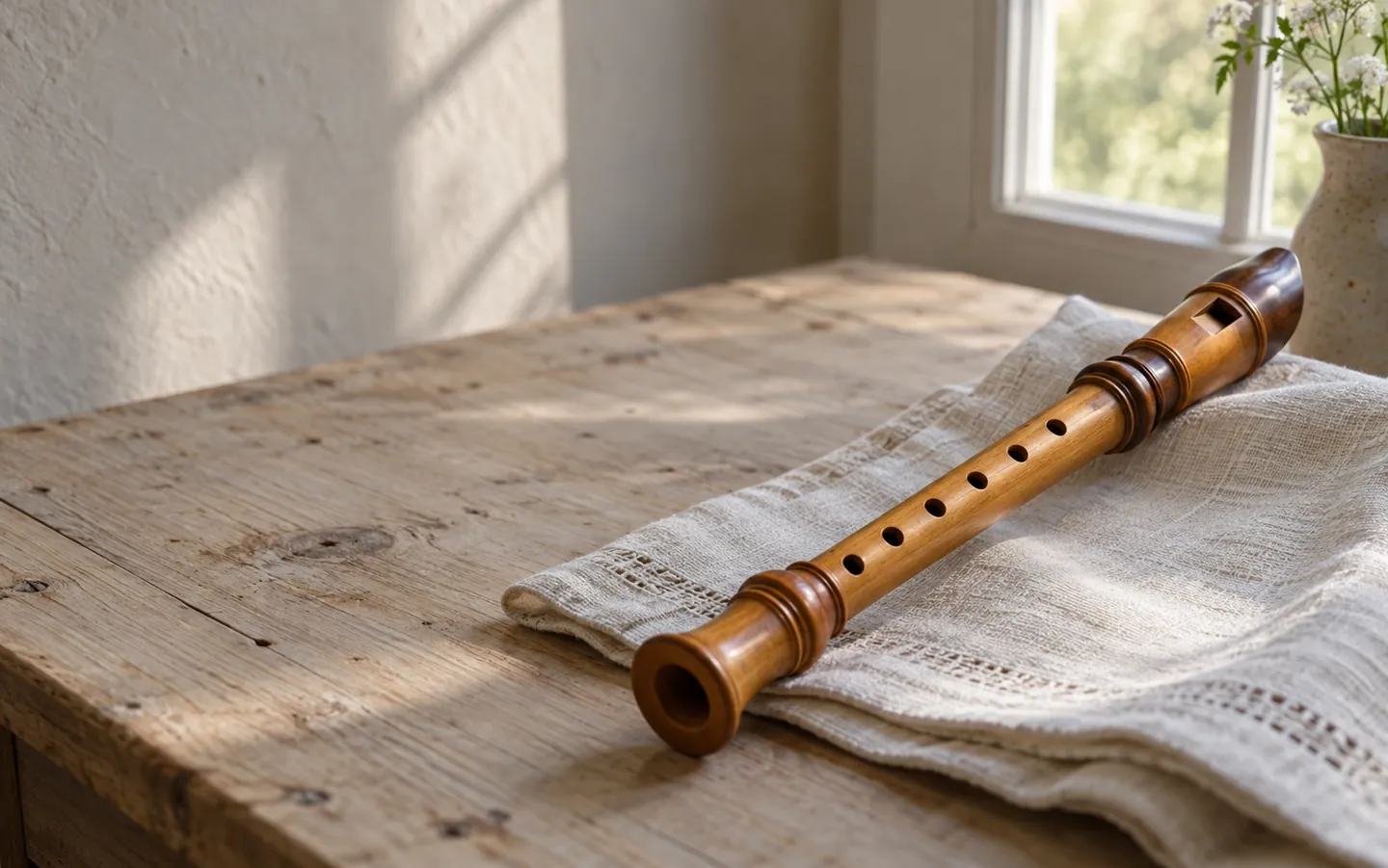
7 + 1 finger holes and a thumb
THE SHORT ANSWER
The thumb hole is what usually marks a recorder out
from other duct flutes such as the tin whistle.
THE SOUND
Air blown through a narrow duct hits a sharp edge, which sets the air column vibrating. Covering holes changes the length of that column, and so the note.
How it worksTHE FAMILY
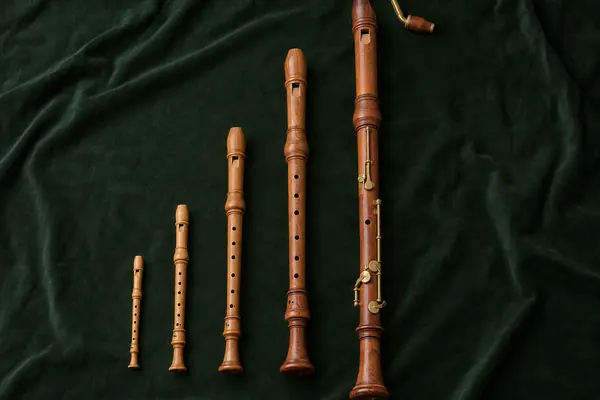
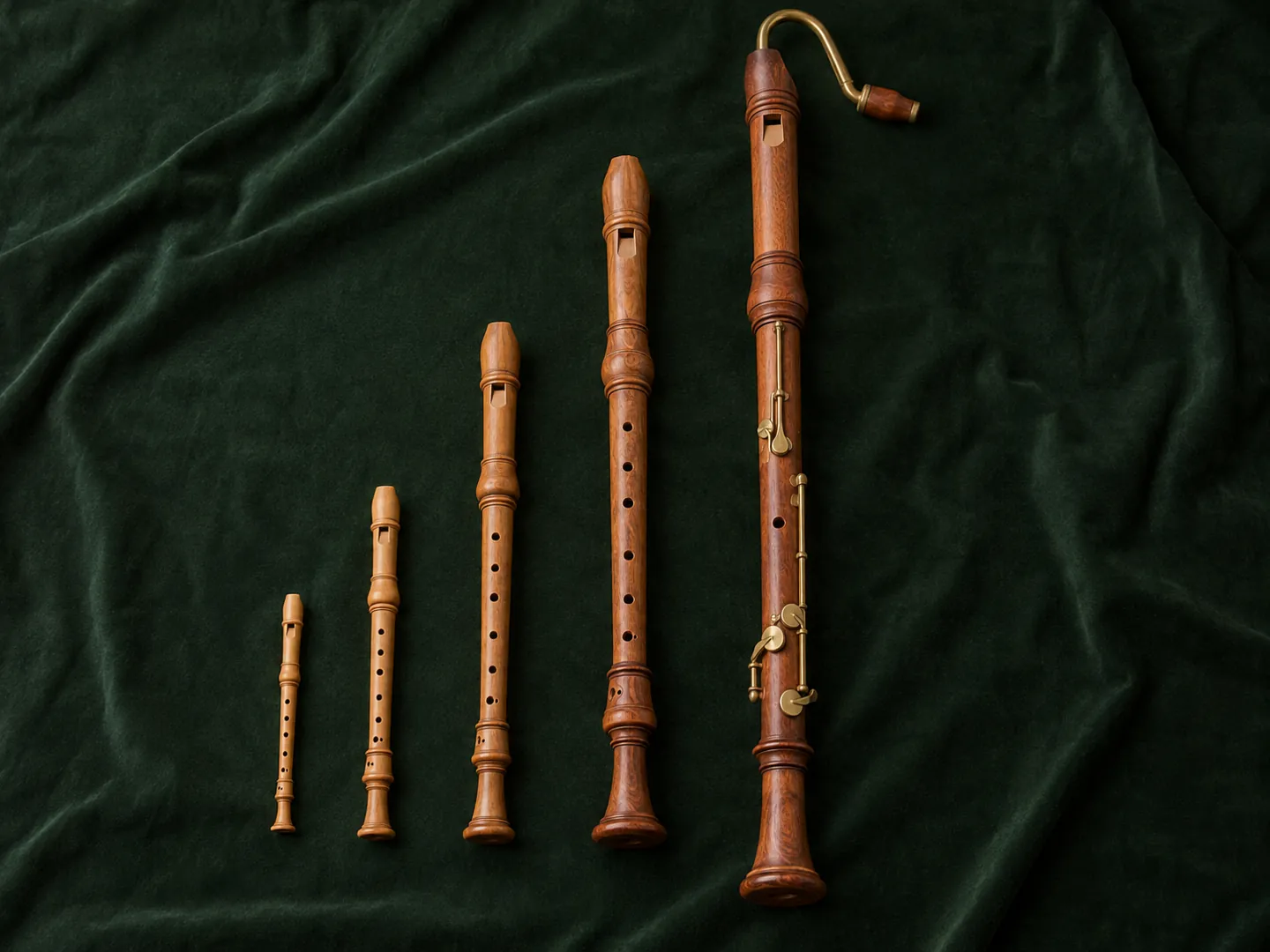
The common sizes are sopranino, descant, treble, tenor and bass. The descant's lowest note is C, the treble's is F.
Meet the familyTHE CLASSROOM
Professional recorders are usually wooden, often boxwood. School recorders are commonly moulded plastic, used since the modern revival.
See the numbersMEET THE FAMILY
Pick a size to see its lowest note and how it is used. The bar shows how high the instrument sounds.
Lowest notes from published references; most recorders made today follow the Baroque design.
TWO NUMBERS WORTH KNOWING
One figure on how old the English name is,
one on how much music a recorder can play.
1388
Earliest known use of the English word
The word "recorder" first appears in household accounts from 1388. The verb "record" once meant to learn by heart or recite, and only later meant playing music.
THE NAME · 1388
2 octaves + a tone
Span of a modern Baroque-model recorder
A modern Baroque-model recorder usually spans about two octaves and a tone. The upper octave is played by partly opening, or pinching, the thumb hole.
THE RANGE · BAROQUE MODEL
Surviving medieval recorders include one excavated in 1940 near Dordrecht in the Netherlands, dated to a house occupied from 1335 to 1418, and one found in 1987 in Göttingen, from a house dated between 1246 and 1322.
A SHORT HISTORY
The recorder's popularity has risen and fallen over seven centuries.
Britannica describes the recorder as a 14th-century improvement on earlier, similar instruments. Medieval examples survive from finds at Göttingen, Dordrecht, Tartu and Elbląg.
Widely played in both periods. Instruction books appeared in 1511 and 1535, and Baroque composers wrote mainly for the treble.
After the mid-18th century the recorder became obsolete and was little used in the Classical and Romantic periods.
Revived from 1919 through the historically informed performance movement, it became a popular amateur and educational instrument.

HOW IT WORKS
At the top of the recorder a block, sometimes called the fipple, nearly closes the pipe, leaving only a narrow duct. Air through the duct is split by a sharp edge, flipping in and out of the tube and setting the column of air vibrating.
Finger holes change the length of the vibrating column. On the Baroque design the lowest two holes can be paired to play the semitone above, and the high octave comes from pinching the thumb hole. A simplified German fingering, made mainly for education, uses a smaller fifth hole.
QUESTIONS PEOPLE ASK
Seven finger holes on the front and one thumb hole on the back. The thumb hole is what typically distinguishes a recorder from other duct flutes.
The descant, or soprano, has C5 as its lowest note; the treble, or alto, has F4. Baroque solo music was written almost entirely for the treble.
A simplified system developed in the early 20th century with a smaller fifth hole. It became obsolete for general use by the 1950s because many chromatic notes were out of tune, but is still made mainly for education.
Surviving medieval recorders include one found in Göttingen from a house dated between 1246 and 1322, and the English word is first recorded in 1388.
Both are duct flutes. The French flageolet has four finger holes and two thumb holes, while the recorder has seven finger holes and one thumb hole, giving a different scale.
It works as an octave vent. Partly uncovering it, often called pinching, makes the lowest mode of the air column unstable, so the recorder sounds in its higher register without simply blowing harder.
Sources
ABOUT THIS NAME
doodlerecorder.com is part of the DoodleSale portfolio. It isn't in an auction right now, but you can ask about leasing it.